How to Get Started with Stablecoins for Businesses
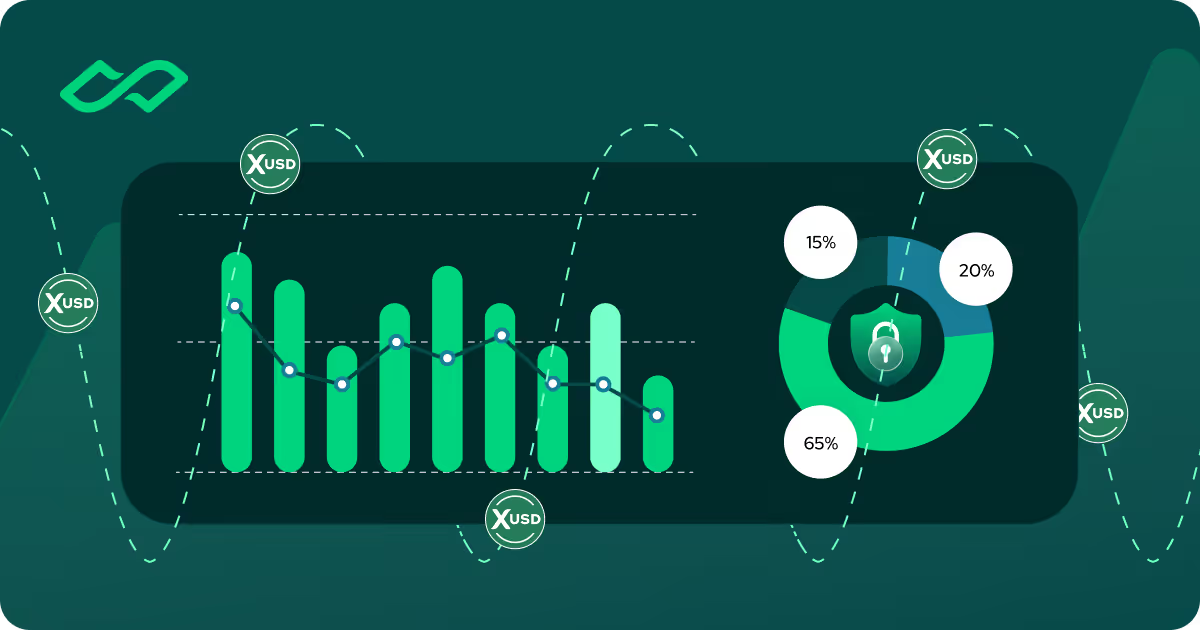
In the traditional financial system, delays carry real costs and hidden risks. For global enterprises, payment networks, and treasury teams, the 48-to-72-hour window where banking rails go dark represents trapped working capital, settlement risk, and missed opportunity. As the global economy moves toward 24/7 operations, the friction of traditional infrastructure has become a bottleneck for growth.
How Stablecoins Transform Business Payments
StraitsX is the issuer of XSGD and XUSD, fiat-pegged stablecoins that are fully reserved and acknowledged by the Monetary Authority of Singapore (MAS) as substantively compliant with the Single-Currency Stablecoins (SCS) framework. Beyond stability, our stablecoins enable businesses to streamline cross-border settlements, reduce FX risk, and execute payments in near real time, regardless of traditional banking hours.
Programmable compliance adds another layer of control. Businesses can enforce spending rules, automate AML/KYC checks, and embed conditional logic into payments. This transforms stablecoins into dynamic tools for corporate treasury, bridging the gap between fiat and digital finance without sacrificing compliance or transparency.
StraitsX: Trusted Infrastructure for Businesses
As a Major Payment Institution (MPI) licensed by the MAS, StraitsX operates systems that support compliance through configurable, rule-based controls. Furthermore, XSGD and XUSD are fully backed by liquid reserves held in segregated accounts at leading institutions like DBS and Standard Chartered, and redemptions are guaranteed at par value. By leveraging this infrastructure, companies can adopt stablecoins with certainty, unlock operational efficiency, and reduce reliance on traditional banking rails for international payments.
Key Considerations for Businesses
When integrating stablecoins into business workflows, enterprises should focus on:
Regulatory Compliance and Adherence to Frameworks
The regulatory environment is the foundation of trust. For businesses in Singapore and abroad, adherence to the MAS Single-Currency Stablecoin (SCS) Framework is the gold standard.
- Businesses should prioritize stablecoins issued by entities regulated under the MAS framework, as this indicates the issuer meets stringent requirements for value stability and capital adequacy.
- Under the SCS framework, regulated tokens must be pegged to the SGD or a G10 currency (e.g., USD, EUR, JPY). This ensures the assets are tied to highly liquid, globally recognized economies.
- Frameworks like the SCS set out requirements governing reserve backing and the treatment of underlying reserves under the regulatory framework.
Secure Reserve Management and Redemption
A stablecoin is only as stable as the assets backing it. Businesses should assess the issuer’s transparency and liquidity.
- 100% Reserve Backing: Reserves should be held in low-risk, cash-equivalent assets (such as short-term government bonds) and must always equal or exceed the value of tokens in circulation.
- Guaranteed Redemption: A critical business requirement is the ability to exit. Regulated issuers are mandated to fulfill redemption requests at par value within five business days, ensuring your capital isn't "trapped" during market volatility.
- Independent Attestations: Look for monthly third-party attestations and annual audits. This verified transparency is essential for internal risk assessments and meeting external audit standards.
Integration with Treasury, Payroll, and Supplier Workflows
Stablecoins should not exist in a silo; they should be a seamless "rail" within your existing financial stack.
- 24/7 Treasury Operations: Unlike traditional banking, stablecoins allow treasury teams to move liquidity across borders or between subsidiaries on weekends and public holidays, eliminating the "liquidity gap" caused by banking hours.
- Programmable Supplier Payments: By integrating with APIs, businesses can automate payouts. For example, a smart contract can trigger a stablecoin payment to a supplier the moment a digital bill of lading is signed.
- Global Payroll: Stablecoins enable near-instant disbursement to international contractors. This removes the need for multiple intermediary banks, significantly reducing the "hidden fees" often associated with cross-border SWIFT transfers.
Automated Compliance to Reduce Operational Risk
To scale stablecoin usage, businesses can consider replacing replace manual verification with "compliance-as-code."
- Real-Time Sanctions Screening: Automated tools can screen every wallet address against global watchlists before a transaction is broadcast, preventing accidental interactions with sanctioned entities.
- Smart Contract Guardrails: Implement internal controls such as Multi-Signature wallets, which require multiple authorized sign-offs for large transfers, mimicking the "maker-checker" protocols of traditional corporate banking.
These considerations ensure that businesses are not only leveraging stablecoins for efficiency, but doing so in a safe, compliant, and scalable way.
Learn more about stablecoin for business.
The Future of Business Payments
Stablecoins are bridging the worlds of traditional finance and digital innovation. Supported by programmable compliance, stablecoins allow businesses to:
- Streamline cross-border payments
- Reduce FX volatility and associated costs
- Automate compliance and treasury workflows
- Access multi-chain digital ecosystems for programmable finance
For forward-looking enterprises, regulated stablecoins act as more than just a payment tool, but rather, a strategic advantage, offering speed, transparency and regulatory certainty in an increasingly digital financial landscape.
Connect with our sales team to see how your business can streamline operations, optimise liquidity, and unlock new digital finance opportunities.
Related Post
.avif)