.avif)
Key Highlights:
- Stablecoin-backed cards use blockchain infrastructure for backend settlement, enabling real-time funding and 24/7 finality while reducing reliance on traditional correspondent banking infrastructure.
- Payments are processed via established networks like Visa and Mastercard; merchants receive fiat without requiring new hardware or process changes, ensuring a frictionless point-of-sale experience.
- By shifting from 3–5 day traditional clearing to near-real-time or same-day clearing on-chain settlement, fintechs significantly improve cash flow, reduce intermediary fees, and reduce settlement and credit risk.
- Leveraging natively issued stablecoins like XSGD and XUSD ensures efficient liquidity management, improves liquidity efficiency, reduces settlement costs, and supports higher transaction success rates.
- Infrastructure partners like StraitsX provide a full stack of stablecoin-native card infrastructure, allowing institutions and fintechs to launch global card programs efficiently.
Stablecoins are rapidly evolving from a niche crypto-enthusiast tool into a mainstream financial product, offering a pathway for digital assets into the rhythm of everyday life through increasing institutional adoption. As institutional adoption accelerates, the industry is shifting focus towards consumer-level utility. Stablecoin-backed cards have become a key pathway to unlock this mainstream adoption, acting as the interface between institutional-grade digital assets and daily commerce.
This infrastructure effectively connects on-chain value to real-world spending, removing the friction of manual off-ramping. For customers in emerging markets or those underserved by traditional banking, these cards provide a vital link to the global economy.
Market data support the growth. In 2025, stablecoins processed $33 trillion in on-chain transaction volumes, surpassing the combined $25.5 trillion processed by Visa and Mastercard. By the end of 2026, that number could reach $50 trillion as growing corporate, bank, and agentic payments adoption turns on-chain dollars into core payment rails. This momentum is already visible at the consumer level: by mid 2024, monthly transaction volumes for stablecoin-linked cards surged to $1.5 billion, a staggering 600% increase from the $250 million monthly average seen just a year prior.
For enterprises looking to integrate these capabilities, our StraitsX card issuance infrastructure serves as a foundational layer leveraging stablecoins as the underlying settlement layer while operating on established card networks. Below, we explain the mechanics of how these cards function, the differences between stablecoin-backed cards and other traditional cards, and how StraitsX can help you launch your own branded card program.
What is a Stablecoin-Backed Card?
A stablecoin-backed card is a payment card program that uses stablecoins (such as XSGD or XUSD) as the underlying settlement layer while operating on established card networks. Transactions are converted into the required network currency within the issuing framework, linking digital asset treasury operations with regulated payment rails.
Unlike a traditional "stablecoin card", where the focus is on a user spending digital asset balances, a stablecoin-backed card enables users to spend their fiat just as they normally use credit cards, while stablecoins like XSGD or XUSD operate behind the scenes to settle transaction obligations between issuers, card networks, and merchants.
It is important to note that merchants do not need to accept digital assets to benefit from these cards. When a customer uses a stablecoin-backed card, StraitsX performs the stablecoin settlement behind the scenes. The payment is then processed through traditional networks such as Visa or Mastercard. From the merchant's perspective, the transaction looks exactly like any other card payment through their POS or payment network, meaning existing merchant infrastructure continues to work as normal.
By integrating a stablecoin-backed card program, fintechs can leverage the speed and 24/7 nature of blockchain rails to fulfil fiat payment obligations without relying on the legacy correspondent banking system. This transforms stablecoins from a static digital balance into a liquid, functional settlement tool that bridges the gap between Web3 and Web2 commerce while leveraging established networks like Visa and Mastercard for global merchant acceptance across millions of locations worldwide.
What is the Difference Between a Stablecoin Card and a Stablecoin-Backed Card?
For a fintech issuer, the distinction between these two terms is vital:
- Stablecoin Card (The Front-end): Refers to the consumer-facing product. The user sees a stablecoin balance (e.g. XSGD) in their app and spends it at a coffee shop. The focus is on the user experience.
- Stablecoin-Backed Card (The Back-end): Refers to the underlying infrastructure. Program partners use stablecoin liquidity (e.g. XUSD) to settle with its issuer or infrastructure partner, like StraitsX, which then settles with card networks Visa or Mastercard in fiat. This reduces pre-funding friction and cross-border settlement costs.
How Does a Stablecoin-Backed Card Work?
Stablecoin-backed card programs are designed to bridge the gap between digital asset ownership and daily utility. Traditional card settlement can take 3–5 days as funds move through multiple intermediary banks and clearing processes. In contrast, a stablecoin-backed card works by utilising blockchain-native stablecoin rails to facilitate backend settlement, enabling faster (often same-day or near-real-time) settlement between financial institutions.
When a user swipes their card, the system initiates a real-time authorisation process through the card network to verify transaction validity and available funds, while settlement occurs separately via backend treasury and settlement infrastructure.
Understanding how stablecoin-backed cards work requires looking at the four pillars of the transaction life cycle:
- Authorisation (The Tap): The user taps the card, and the request hits the card network to confirm the availability of funds.
- Liquidity Check (The Support Layer): The issuer and program partner confirm sufficient balances in settlement accounts to support the transaction.
- Approval: Once authorisation conditions are met, the transaction is approved and returned through the card network to the merchant.
- Settlement (Netting and Treasury Flow): Transaction obligations are later settled through pooled or netted treasury flows using stablecoin liquidity and fiat rails, depending on the settlement setup.
What Types of Stablecoin-Backed Cards are Available?
Different businesses can leverage card programs in unique ways depending on their operational needs. From crypto exchanges and digital-first fintechs to global marketplaces, companies can embed stablecoin-backed cards directly into their product ecosystem. These businesses can offer modern payment capabilities like programmable spending and instant settlement while maintaining compatibility with global card networks.
Generally, these programs fall into three main categories:
1. Physical Debit Cards
These are physical cards that allow for traditional "swipe and dip" experiences at retail locations and ATM withdrawals. They serve as a familiar bridge for users who want a tangible way to spend their digital holdings.
Examples: RedotPay and UPay offer physical Visa cards powered by StraitsX card issuance infrastructure, allowing users to spend stablecoins globally. Coinbase Card and Bybit Card are other widely recognised external examples in this category.
2. Virtual Cards
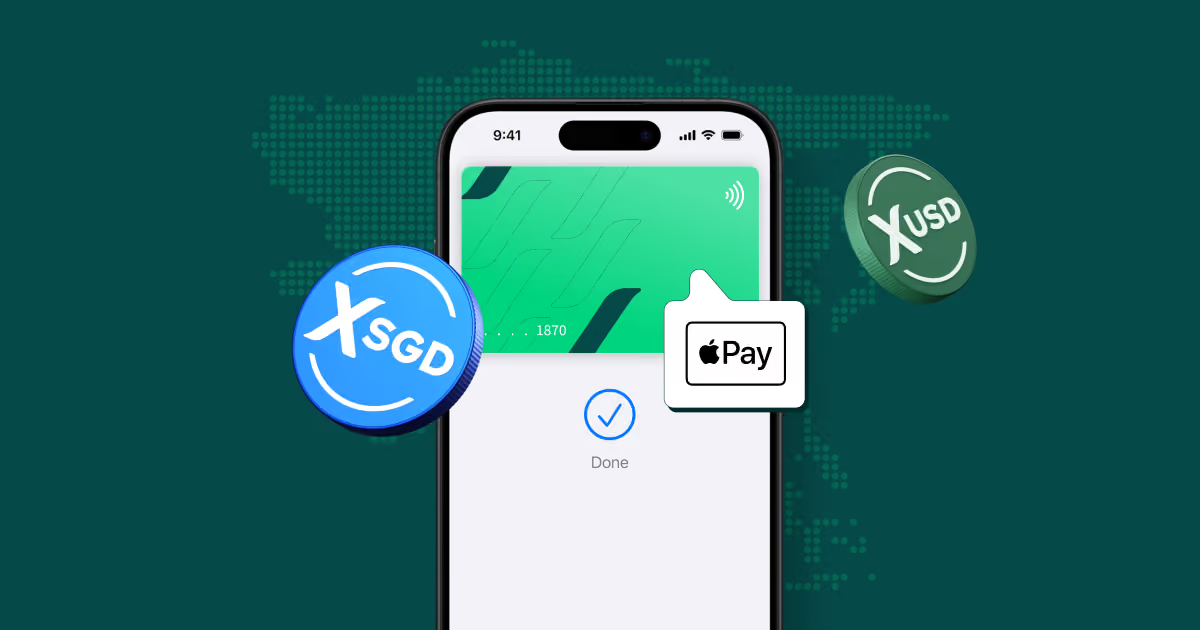
Virtual cards are issued instantly via an API and exist purely within a digital wallet or app. They are optimised for secure online shopping, recurring subscriptions, and contactless payments via Apple Pay or Google Pay.
Examples: Pionex provides virtual cards with seamless Apple Pay in-app provisioning via StraitsX. Tevau and Chocolate Finance also utilise StraitsX card issuance infrastructure to offer instant virtual card solutions to their users. MetaMask and Kast have gained traction by providing virtual-first spending options.
3. Corporate Cards
Designed for businesses and institutions, these cards allow companies to link employee or vendor spending directly to an on-chain stablecoin treasury. They often feature programmable spending limits and real-time expense tracking.
Examples: On the broader market, platforms like Reap focus on enabling corporate teams to spend from decentralised or stablecoin-backed accounts via card programs.
Stablecoin-Backed Cards vs. Credit Cards vs. E-Wallets: What are the Differences?
While traditional credit cards operate on a "spend now, pay later" logic involving credit risks for banks and interest for users, a stablecoin-backed card is fundamentally "asset-backed," meaning a transaction is only authorised because the value is already present in the user's account.
This shift is part of a broader evolution of e-wallets away from "closed" systems restricted to a single app toward "open" systems that function globally. Stablecoin cards represent the peak of this evolution, combining the user-friendly interface of an e-wallet with the global acceptance of a credit card, all while removing the debt risks associated with traditional finance.
For businesses and users, understanding the nuances of these three financial tools is essential for choosing the right infrastructure:
Why is the Stablecoin-Backed Card Rising?
Stablecoin-backed cards are increasingly bridging the gap between digital asset ownership and daily utility, significantly increasing user engagement and retention. By providing a direct spending link to the physical world, platforms evolve from simple storage vaults into comprehensive financial hubs that capture a share of the user's everyday transaction volume.
Beyond the strategic positioning, these cards unlock a suite of practical advantages for both the issuer and the end-user:
- Spending Digital Assets Like Cash: Users can pay for groceries, subscriptions, or travel directly from their stablecoin balance without the need to manually off-ramp to a traditional bank account first.
- Mitigating Volatility: Because stablecoins are pegged to fiat currencies, users maintain consistent purchasing power. They can hold their wealth in a digital format without the price swings typical of unpegged cryptocurrencies.
- Lowering Cross-Border Costs: Traditional international transactions often carry fees of 3% or more. By bypassing legacy banking intermediaries, stablecoin cards can reduce foreign transaction fees, providing a more efficient way for global travellers and businesses to spend.
- Expanding Financial Inclusion: For populations in regions with limited banking infrastructure, low credit card penetration, and volatile local currencies, these cards offer a way to participate in the global economy using digital dollars (like USDC) or regional stablecoins (like XSGD).
- Faster Settlement for Businesses: Behind the scenes, blockchain-based settlement provides an auditable, near-real-time record of payments. This can improve cash flow for businesses and enhance transparency for all parties involved.
What are the Risks Associated with Stablecoin-Backed Cards?
While stablecoin-backed cards offer significant utility, they are not without risks that issuers and users must manage since they are still a form of crypto-enabled cards. To ensure a secure experience, it is vital to understand the primary vulnerabilities associated with digital asset payments:
- Counterparty Risk: This relates to the stability of the stablecoin issuer. If an issuer cannot maintain the 1:1 reserve or faces operational distress, the assets backing the card could lose value.
- Technical & Smart Contract Risk: Vulnerabilities in the underlying blockchain protocols, smart contracts, or the middleware connecting the wallet to the card network could lead to technical failures or security breaches.
- Regulatory & Jurisdictional Risk: Shifts in global or local regulations may impact card functionality, as different jurisdictions have varying degrees of acceptance and legal frameworks for digital assets.
- De-pegging Risk: If a stablecoin deviates from its peg to the fiat currency it represents, the cardholder's purchasing power could drop instantly, resulting in declined transactions or financial loss.
- Custodian Risk: In custodial models, users rely on the fintech or its infrastructure partner to secure assets. If the custodian faces a security breach, user funds could be compromised.
By acknowledging these risks, businesses can better design or select partners with robust programs that prioritise reserve transparency and security. While no financial system is entirely without risk, the move toward regulated stablecoin issuers and audited reserves helps mitigate these risks, making stablecoin-backed spending a viable alternative to legacy systems.
Why Choose StraitsX for Your Card Infrastructure?
Building a stablecoin-backed card from the ground up involves significant technical and regulatory complexities. StraitsX provides the infrastructure to manage these complexities, offering an API-driven approach to card issuance that allows fintechs to scale quickly and securely.
A key differentiator for StraitsX is our role as the native issuer of XSGD and XUSD. By controlling the underlying assets, we offer high efficiency in the settlement process, ensuring that rails are always liquid and transparent. Unlike competitors who rely on third-party assets, StraitsX offers a vertically integrated stack that reduces dependency on external counterparty risks.
To this date, StraitsX has supported an 83-fold increase in cards issued on behalf of our partners and has seen transaction volumes grow by 40x over the past year. Our infrastructure powers major platforms like OKX Pay, RedotPay, Chocolate Finance, Tevau, and Pionex, which processed over $2.95 billion in card volume in 2025 alone.
StraitsX card infrastructure capabilities include:
- Full BIN Sponsorship: We provide the necessary licensing and network relationships so you can launch without seeking your own bank partnerships.
- Native Stablecoin Settlement: Benefit from direct settlement in XSGD or XUSD, optimising treasury management with zero handling fees for our native assets.
- Efficient GTM lead time: Launch branded programs across APAC in as little as 12–14 weeks.
- Wallet Ready Cards: We support end-to-end card tokenisation across major mobile and wearable wallets, like Apple Pay and Google Pay.
- Tokenisation Support: Tokenisation for virtual cards, physical cards, wearables, and in-app provisioning is available via StraitsX.
By leveraging our card issuance infrastructure, businesses looking to launch in Asia can offer their users a seamless spending experience powered by regulated stablecoin settlement rails. We handle the heavy lifting of conversion and settlement, allowing you to focus on delivering the best possible product to your users.
To explore launching a stablecoin-backed card program in Asia, speak with the StraitsX team.
.jpg)