Key Highlights
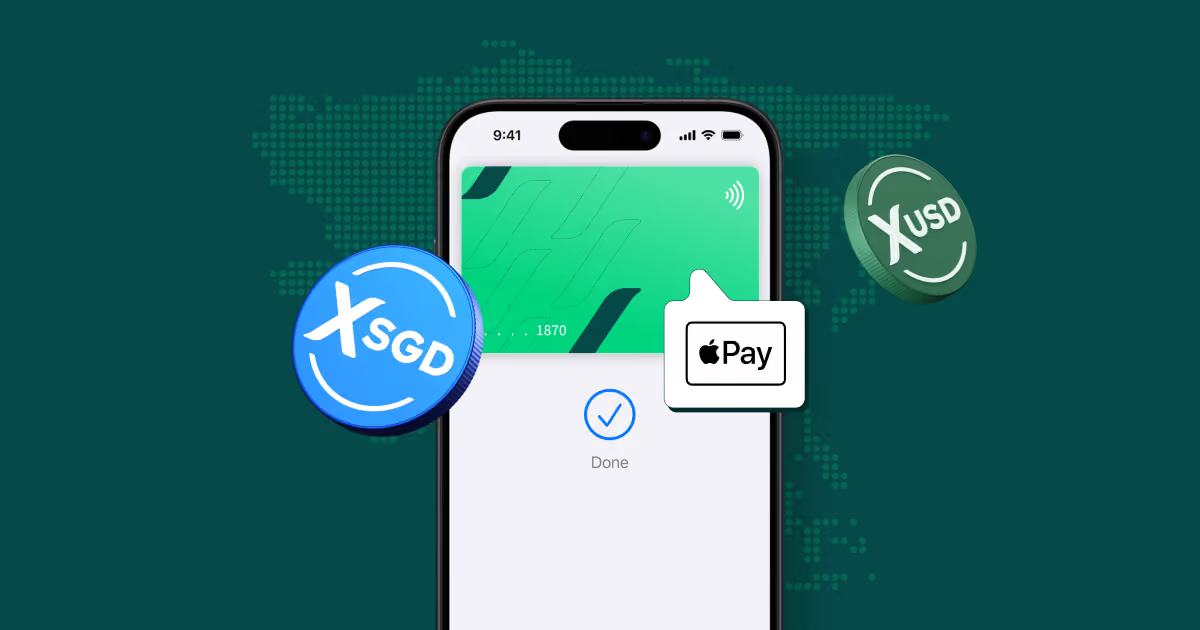
- Stablecoin-backed cards can now be added to Apple Pay, enabling users to pay anywhere contactless Visa cards are accepted.
- For consumers, the payment experience is identical to using any other card. Apple Pay provides the digital wallet experience, Visa authorizes the transaction, while stablecoins power settlement behind the scenes.
- Fintechs and crypto platforms can launch fully compliant stablecoin card programs across APAC markets in weeks, without building their own Visa licensing infrastructure.
- As both a Visa BIN sponsor and the issuer of XUSD and XSGD, StraitsX provides an integrated card issuance and stablecoin settlement infrastructure, including Apple Pay, Google Pay, and Samsung Pay In-App Provisioning.
Paying with stablecoins no longer requires merchants to accept crypto directly. Today, users can simply tap their phone using Apple Pay, while stablecoins settle the transaction behind the scenes.
In the beginning of the year 2026, StraitsX completed full Apple Pay In-App Provisioning certification for Pionex Cards enabling Pionex users to add their stablecoin-backed card to Apple Wallet with a single tap and spend at any Visa-accepting merchant worldwide, while XUSD or XSGD settles the transaction behind the scenes.
For consumers, using stablecoins is as easy as using Apple Pay. Add your stablecoin-backed card to Apple Wallet and pay for everyday purchases, whether you're buying coffee, taking public transport, or shopping online. For fintech and crypto platform operators, the more important question is: what does it take to offer this to your own users, and how do you get there without a two-year licensing odyssey?
Both questions answered below.
How Stablecoin Payments Work with Apple Pay
A stablecoin payment involves three distinct layers. Stablecoins fund and settle the transaction behind the scenes, while the merchant continues receiving local fiat currency through the existing payment infrastructure. Visa authorizes and routes the card transaction through the global card network. Apple Pay provides the wallet experience, allowing users to securely store and tap their card using Apple Wallet
StraitsX CEO Tianwei Liu put the design philosophy plainly: "No user cares about whether a payment runs on stablecoins or fiat; they only care if the payment goes through." The goal is for the stablecoin layer to be completely invisible to everyone in the payment flow except the operator managing settlement economics.
Apple Pay complements this model because it focuses on securely presenting the payment credential rather than changing how payments are processed. Whether the underlying funding source is a traditional bank account or stablecoins, users see the same familiar Apple Wallet experience while Visa continues to process the transaction as usual.
The mechanics of provisioning
Adding the card to Apple Wallet works via two paths:
- In-App Provisioning: Users can add their card to Apple Wallet directly from the app with a single tap. There's no need to manually enter card details or switch between apps, resulting in a faster onboarding experience and higher card activation rates.
- Direct Provisioning / Wallet Extension: The user initiates from the native Apple Wallet app, authenticates with Face ID or Touch ID, and the card is instantly provisioned.
The security layer is the Visa Token Service (VTS). Real card credentials — PAN, expiry, CVV — are replaced by a unique encrypted token that is device-specific. The actual card data is never stored on the device and is never exposed to the merchant at point of sale.
Once provisioned, a StraitsX-issued card works across NFC contactless payments in-store, in-app iOS purchases, Safari online checkout, Apple Watch payments, and Express Transit mode — meaning a user can tap through a subway turnstile without unlocking their phone. That last one is worth noting as a concrete counter to latency concerns: stablecoin-settled payments now work in one of the highest-speed, zero-tolerance-for-friction payment environments that exists.
Why JIT settlement matters to operators
Because StraitsX is both the issuer of XUSD, XSGD and the Visa BIN sponsor, card settlement happens within a single integrated infrastructure. This removes the need to coordinate between separate stablecoin issuers and card issuers, reducing operational complexity, settlement costs and potential points of failure.
StraitsX's Purpose-Built Infrastructure for APAC
Delivering a seamless stablecoin-backed card experience requires more than issuing cards. Behind every tap-to-pay transaction is a combination of regulated infrastructure, card scheme licensing, wallet provisioning, compliance, and settlement working together. StraitsX brings these capabilities together in a single platform. Regulated by the Monetary Authority of Singapore (MAS), StraitsX is both the issuer of XUSD, XSGD, as well as a Visa BIN sponsor.
This integrated model removes the need to coordinate across multiple providers for stablecoin issuance, card issuing and settlement. Instead, fintechs and digital asset platforms can launch on a unified infrastructure with a consistent compliance framework and a more streamlined settlement process.
Certified Wallet Provisioning for Apple Pay, Google Pay and Samsung Pay
Issuing a payment card is only one part of the user experience. To enable seamless mobile payments, card issuers must also meet the certification requirements for digital wallets such as Apple Pay, Google Pay and Samsung Pay.
These certification programmes are widely recognised across the industry for their rigorous standards, covering security, tokenization, provisioning flows, user experience, production readiness and ongoing compliance. Successfully completing them requires extensive testing to ensure cardholders can securely provision and use their cards across supported devices.
StraitsX now supports certified wallet provisioning across Apple Pay, Google Pay and Samsung Pay. This includes In-App Provisioning, direct provisioning, and wearable tokenization for compatible smart wearables.
As a result, fintechs building on StraitsX can offer users a familiar, one-tap wallet experience without having to navigate the certification process independently.
The Next Phase of Stablecoin Payments
As stablecoin adoption continues to grow, expectations around the user experience are changing. Consumers increasingly expect to use stablecoin-backed cards in the same way they use any other payment card, whether they're paying in-store, shopping online or tapping with their phone.
This shift is reflected in the market. According to Artemis Analytics, global monthly stablecoin-linked card volumes grew from approximately US$250 million in monthly volume at the start of 2023 to more than US$1.5 billion by mid 2025. During the same period, Visa reported an annualised run rate of US$3.5 billion in stablecoin-linked card spending, demonstrating growing demand for digital asset payments through familiar card networks.
For card issuers, this means the bar has moved beyond simply offering a stablecoin-backed card. A seamless mobile wallet experience through Apple Pay, Google Pay and Samsung Pay is becoming an expected part of the product rather than a premium feature.
StraitsX has seen this momentum first-hand. Between Q4 2024 and Q4 2025, card transaction volume on its infrastructure grew 40×, while card issuance increased 83×.
Whether users are paying with a physical card, tapping their phone through Apple Pay, or using a wearable device, the goal remains the same: to make stablecoin payments feel as familiar and effortless as any other everyday card transaction.
Frequently Asked Questions
How do stablecoin payments work with Apple Pay?
Apple Pay acts as the digital wallet, while Visa authorizes and routes the card transaction. Stablecoins are used as the funding or settlement layer behind the scenes, depending on the card program. Merchants continue to receive local fiat through existing payment infrastructure, with no changes required to their checkout experience.
What is the difference between a stablecoin card and a regular debit card?
The key difference is the funding source and settlement speed. A stablecoin card draws from a user's stablecoin balance to settle transactions in near-real-time, while a debit card uses funds from a bank account and follows a traditional 3-5 day settlement cycle. For the user at checkout, the experience is identical.
Which stablecoins can be used to fund these card programs?
Card programs can be funded using StraitsX-issued stablecoins, including XUSD and XSGD, as well as supported third-party stablecoins such as USDC.
What is Just-In-Time (JIT) funding?
Just-In-Time (JIT) funding authorizes transactions by pulling funds from a user's stablecoin balance at the exact moment of purchase. This provides a superior experience to pre-paid models, as it eliminates the need for users to manually top up a separate card wallet.
Is StraitsX regulated to offer these services?
Yes, StraitsX is regulated by the Monetary Authority of Singapore (MAS) and holds multiple Major Payment Institution licenses. Partners building on StraitsX's infrastructure inherit its robust compliance framework for AML, KYC, and card scheme rules.
What is the benefit of partnering with a Visa BIN sponsor?
Launching an independent card program requires significant investment in licensing, compliance and scheme approvals. By partnering with a Visa BIN sponsor such as StraitsX, fintechs and digital asset platforms can bring compliant card programs to market much faster while leveraging existing regulatory and operational infrastructure.
Can these cards be used with wearables like Apple Watch?
Yes, the card programs support full wearable tokenization. This allows users to provision their card not only to their iPhone but also to an Apple Watch or other compatible smart wearables like rings for tap-to-pay.
%20(1).jpg)
.jpg)