StraitsX Launches AgentiX Playground to Accelerate the Future of Agentic Payments
.jpg)
From industry dialogue to working prototypes, AgentiX Playground brings together AI, payments, blockchain, and developer communities to explore how AI agents can participate in real-world commerce.
Artificial intelligence is moving beyond assisting users to increasingly capable agents that can reason, make decisions, and take actions on their behalf. At the same time, stablecoins are becoming an increasingly important component of digital payments, offering programmable, always-on movement of value across blockchain networks.
Together, these developments are creating the foundation for a new era of agentic commerce, where AI agents can discover products, make purchasing decisions, and execute transactions on behalf of users.
But one important question remains:
How can AI agents safely and reliably move money in the real world?
Today's commerce infrastructure was largely designed around human users. Merchants accept established payment methods, consumers navigate checkout flows, and financial institutions provide the underlying authorisation and settlement infrastructure.
AI agents introduce a fundamentally different participant: software that can make decisions, take actions, and initiate transactions on behalf of users.
For agentic commerce to move beyond demos, the ecosystem needs infrastructure that connects AI agents, payment rails, stablecoins, cards, wallets, merchants, and the controls required to make autonomous transactions secure and dependable.
This is the challenge that StraitsX is exploring through AgentiX Playground.
What Is AgentiX Playground?
AgentiX Playground is StraitsX's flagship industry initiative bringing together ecosystem partners, developers, startups and enterprises to shape the future of agentic AI in payments and commerce.
New technologies need an environment where ideas can be tested, assumptions challenged, and infrastructure built before they can scale. AgentiX Playground provides that environment for agentic payments, connecting the people, technology, and infrastructure needed to explore how AI agents can participate in real-world commerce.
The AgentiX Playground is structured around three complementary stages: Define, Build, and Showcase.
Define
The first industry roundtable, “Stablecoin-linked Agentic Commerce and Payments,” brought together perspectives from across the payments and technology ecosystem to explore the infrastructure required to enable agentic payments, including agent identity, authorisation, trust, interoperability, settlement, governance, and the role of stablecoins in agentic commerce.
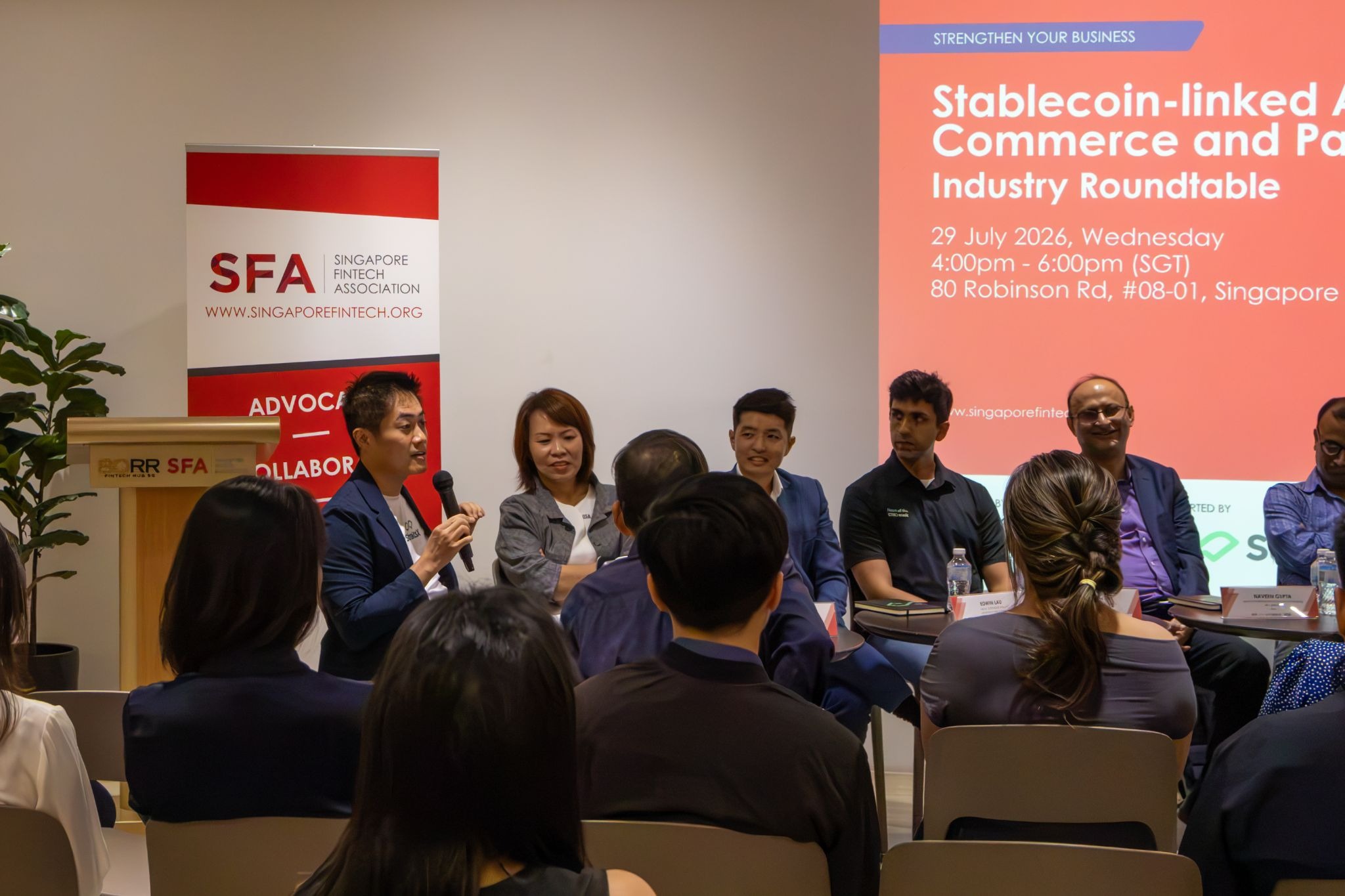
The discussion provides a framework for understanding the opportunities, challenges, and priorities that will shape the infrastructure required as AI agents begin to participate in financial transactions.
Build
Hackathons turn these questions into working experiments. Developers and builders use real payment infrastructure to prototype agentic commerce experiences, test new payment flows, and explore how AI agents can interact with payment systems in practice.
The inaugural AgentiX Playground: Hack the Agent hackathon marked the first major build phase of the initiative.
Showcase
The ideas, prototypes, and standout work developed through AgentiX Playground will continue beyond the hackathon, with winning builds and insights showcased at TOKEN2049 side events and Singapore FinTech Festival 2026.
This gives the initiative a clear progression from industry dialogue to hands-on experimentation and, ultimately, broader ecosystem exposure.
AgentiX Playground: Hack the Agent — Building the Next Generation of Agentic Commerce
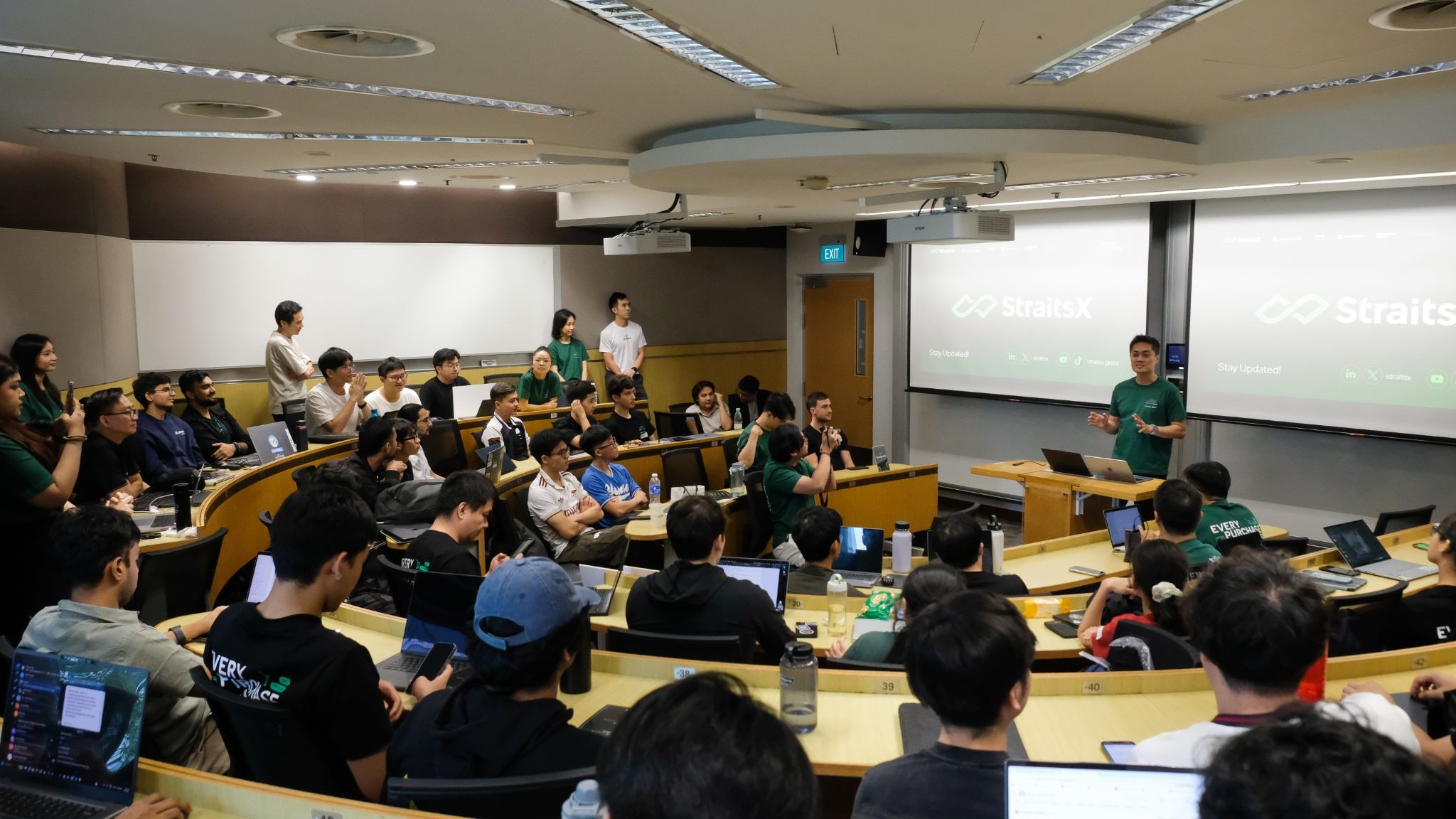
The inaugural AgentiX Playground: Hack the Agent brought together 67 builders across 40 teams, including university students, developers, and working professionals, to tackle a central challenge:
How can AI agents discover, decide, and pay for products on behalf of users?
Hosted by StraitsX in partnership with Avalanche, AWS, Crossmint, Convergence Summit and SMU FinTech, the three-day hackathon (14 - 16 August 2026) gave participants the opportunity to move beyond conceptual discussions and build working prototypes.
Rather than simply demonstrating what an AI agent could do, participants were challenged to explore the infrastructure required for an agent to take action and complete a payment.
This included everything from product discovery and purchasing decisions to payment execution and the underlying infrastructure required to make these experiences possible.
“Agentic payments are still an emerging space, and we believe the best way to understand what is possible is to bring different parts of the ecosystem together and build. Hack the Agent gave developers the opportunity to move beyond ideas and experiment with the real infrastructure needed for AI agents to participate in commerce.” — Daniel Oon, Head of Ecosystem
What Builders Were Asked to Build
The hackathon was designed as a practical playground for exploring what agentic commerce could look like when AI agents are given access to real payment infrastructure.
Rather than building isolated AI demonstrations, participants were challenged to create working experiences across three areas of the emerging agentic commerce stack:
- Track 1: AI Commerce Agents
Build AI agents that discover, compare, and purchase products on today's internet. - Track 2: Agentic Payments Infrastructure
Build the wallets, payment rails, policies, and protocols that let AI spend safely. - Track 3: AI-Native Commerce
Build the merchant experiences, APIs, and protocols for a future where AI agents become first-class customers.
What Payment Infrastructure Was Used to Build Agentic Payments?
A key part of the hackathon was giving builders access to real payment infrastructure, rather than asking them to simulate the payment layer. Hackathon solutions used XSGD on Avalanche C-Chain Mainnet as the underlying payment asset and network, providing a common foundation for teams to experiment with agentic payment flows. Builders could also explore MCP with Agentic x402, alongside card-based payment experiences, to experiment with how AI agents can discover, initiate, and complete transactions across different payment scenarios and use cases.
This gave participants a common payment foundation while leaving room to experiment with different agent experiences, payment flows, architectures, and use cases.The result was not simply a collection of AI demonstrations. It was a practical exploration of how stablecoins, cards, and emerging machine-payment protocols can work together to enable agentic commerce.
Congratulations to the Winning Teams
Track 1: AI Commerce Agents
🏆 Champion: BTB (Poh Kai Wei Ranen, Brandon Aw Jun Yu, and Beh Wen Jie) — Project: Happy, spending limits for AI agents.
🥈 2nd Place: bigtree (Teh Kim Wee, Don Ng, and Keith Goh) — Project: Agent Lane, an auditable agentic workflow from discovery to checkout, keeping humans in control.
🥉 3rd Place: Mickeys Clubhouse (Jaydon and Lucas) — Project: Laeria, agentic payments under a mandate.
Track 2: Agentic Payments Infrastructure
🏆 Champion: Hallelujah (Chye Zhi Hao and Lin Zhenming) — agentpay, the trust layer that makes AI spend safely.
🥈 2nd Place: GitGud — Intent Guard, ensuring agent payments only clear when the final charge matches the user's signed approval.
🥉 3rd Place: Sumit Sanjay Shinde — Project: Gatex, agents that buy, without being hijacked
Track 3: AI-Native Commerce
🏆 Champion: Hu Xiaoming — Project: Lobang Blind Box Ticket Hub, agent-native clearance exchange
🥈 2nd Place: Ong Si Hui, [Project Description] — Project: Aisle, agentic storefront protocol.
🥉 3rd Place: Overclocked (Dewa Bratanusa Eka Satya and Saai Aravindh Raja) — Project: Morrow, a merchant-side commerce primitive for scarce inventory.
Real-World Impact Award: Build the most impactful solution that solves a real-world commerce challenge through Agentic Payments.
🏆 Champion: BTB (Poh Kai Wei Ranen, Brandon Aw Jun Yu, and Beh Wen Jie) — Project: Happy, spending limits for AI agents.
Best Use of x402 on Avalanche: Build the most innovative agentic payment experience using x402 on Avalanche.
🏆 Champion: Hu Xiaoming — Project: Lobang Blind Box Ticket Hub, agent-native clearance exchange
Best Architected Solution Award: Design the most secure, reliable, and well-engineered agentic payment solution with AWS Well-Architected principles.
🏆 Champion: Ong Si Hui — Project: Aisle, agentic storefront protocol.
“What impressed us was the teams’ ability to move beyond the idea of AI agents making payments and think about how these experiences could work in the real world. The strongest projects connected a clear user or business problem with a practical payment experience, showing how agentic payments can move from experimentation towards something people could actually use.” — Victor Liew, CTO and Co-Founder, StraitsX
“It was exciting to see builders experiment with x402 as a way for AI agents to interact with payment infrastructure. The projects demonstrated how machine-initiated payments can open up new possibilities for autonomous commerce, particularly when combined with programmable stablecoin infrastructure and blockchain networks.” — Jacky Kong, Head of Hong Kong, Ava Labs
“Agentic applications need to be designed differently from traditional software because they introduce greater autonomy and more complex interactions between systems. What stood out was the attention teams paid to how their solutions could be structured to operate reliably, securely, and at scale, rather than focusing only on the AI experience.That is the Well-Architected mindset, and it is what turns a weekend prototype into a real payment product.” — Qinjie Zhang, Solutions Architect, AWS Startups
From Hackathon to Real-World Agentic Commerce
The roundtable established the key questions for agentic payments: identity, authorisation, trust, interoperability, governance, and settlement. Hack the Agent then put those questions to the test, with builders using real payment infrastructure to explore how AI agents can interact with cards, stablecoins, wallets, and emerging machine-payment protocols.
Together, the conversations and experiments point to a clear conclusion: the next challenge for agentic commerce is not simply making AI agents more capable. It is building the payment infrastructure that allows them to transact safely, reliably, and at scale.
No single payment rail will define this future. Stablecoins, cards, wallets, real-time payment systems, and machine-payment protocols can each serve different transaction scenarios. What connects them is the infrastructure layer that enables agents to identify, authorise, execute, and settle transactions across these rails.
“The next phase of agentic commerce is not about giving AI agents more ways to pay. It is about building the infrastructure that allows them to transact safely across the payment systems that already exist. Agents need clear identity, permissions and accountability, while businesses need reliable settlement and compliance. That infrastructure layer is what will make agentic commerce work in the real economy.”
— Tianwei Liu, CEO and Co-Founder of StraitsX
This is the next focus of AgentiX Playground: moving from defining the challenges and testing the possibilities to showcasing what agentic payment infrastructure can look like in practice.
Through upcoming showcases at TOKEN2049 and Singapore FinTech Festival 2026, AgentiX Playground will bring together builders, payment companies, technology providers, and the wider ecosystem to demonstrate emerging use cases and continue the conversation around the infrastructure required for agentic commerce.
For StraitsX, the opportunity is clear: as AI agents become participants in the economy, payment infrastructure must evolve from enabling people to transact to enabling both people and machines to transact safely and compliantly.
Frequently Asked Questions
What are agentic payments?
Agentic payments are transactions initiated or executed by AI agents on behalf of users or businesses, within predefined permissions, controls, and payment infrastructure.
How are agentic payments different from traditional payments?
Traditional payments generally require a human to initiate and complete a transaction. Agentic payments allow software agents to make decisions and initiate transactions autonomously, requiring additional mechanisms for identity, authorisation, governance, and transaction controls.
What infrastructure do AI agents need to make payments?
AI agents need access to payment rails, wallets or accounts, transaction authorisation, identity and permission controls, settlement infrastructure, and mechanisms for monitoring and governing autonomous transactions.
There are multiple ways to connect agents to payment capabilities, including Model Context Protocol (MCP), payment-specific CLIs, and agentic skills or built-in tool instructions. MCP provides an open standard for connecting AI applications with external tools, data sources, and services, while CLIs and agentic skills can provide agents with structured instructions and interfaces for interacting with payment capabilities.
StraitsX is exploring this infrastructure through stablecoin settlement with XSGD and XUSD, card payment infrastructure, and an MCP server for card issuing, enabling AI agents to interact with payment capabilities through a standardised interface.
What role do stablecoins play in agentic payments?
Stablecoins such as XSGD and XUSD can provide programmable, always-on settlement between parties and serve as one of several payment rails available to AI agents. Their programmable nature also enables transaction controls and compliance requirements to be embedded into the payment layer, creating a foundation for more controlled agentic payments.
Can AI agents use cards to make payments?
Yes. Card infrastructure can give AI agents access to established merchant acceptance networks, subject to appropriate authorisation, controls, and programme rules. This allows agents to make payments through existing card acceptance infrastructure rather than requiring merchants to adopt an entirely new payment method.
StraitsX already works with clients using its card issuing infrastructure to support payment experiences where transactions can be initiated or managed by AI agents.
Related Post
%20(1).jpg)