
The Road to Mainstream Agentic Payments
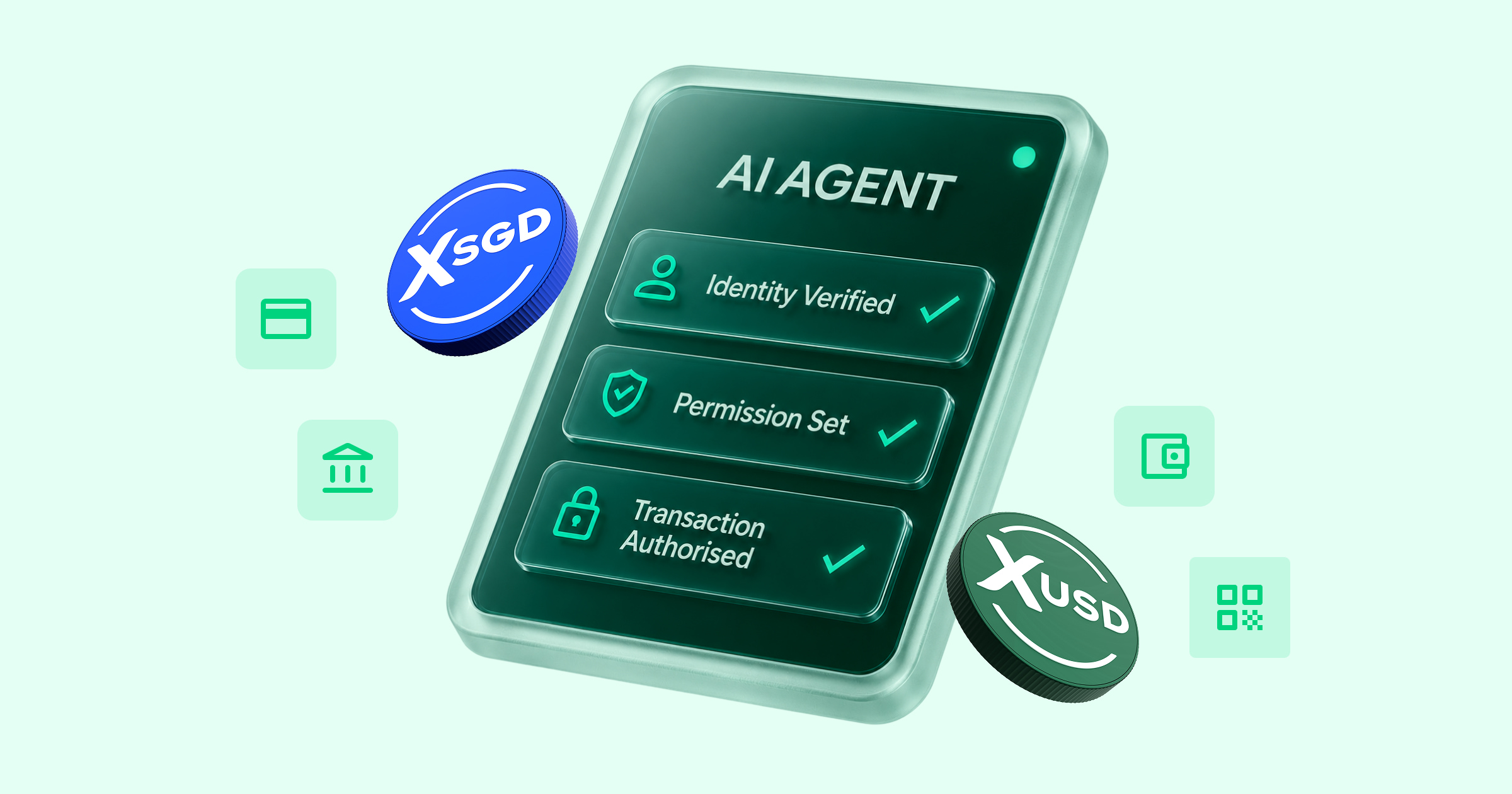
Agentic payments are moving from an emerging concept toward real-world experimentation, as AI agents become increasingly capable of researching products, making decisions and initiating transactions on behalf of users and businesses.
But scaling agentic payments requires more than capable AI models. AI agents need trusted payment infrastructure that can establish identity, enforce permissions, authorise transactions, connect to established payment rails and settle value securely.
This raises a fundamental question: What infrastructure is required for agentic payments to move from experimentation to mainstream adoption?
Southeast Asia is well positioned for this next phase. The region already has one of the world's most mature digital payments ecosystems, supported by widespread QR adoption, real-time payment infrastructure, digital wallets and growing stablecoin innovation.
This is what StraitsX and Visa explored with industry leaders at the Singapore FinTech Association (SFA) Stablecoin-Linked Agentic Commerce & Payments Roundtable, bringing together perspectives from Google Cloud, AWS, Grab, Stripe, OKX, Tazapay, Finmo, Aave and Monad.
The discussion reinforced a broader point: mainstream adoption will depend on infrastructure design, not AI capability alone. From payment rails and governance to cross border settlement and interoperability, several factors will shape how agentic payments develop in Southeast Asia.
What Payment Infrastructure Will AI Agents Use?
AI agents will use a combination of cards, bank transfers, QR payments, digital wallets and stablecoins, depending on the transaction and the payment options available.
For an AI agent to participate in real-world commerce, several layers of infrastructure need to work together. These include:
- Identity: establishing which user, business or entity the agent represents
- Permissions: defining what the agent is authorised to do
- Authorisation: determining whether a specific transaction can proceed
- Payment rails: enabling transactions through cards, bank transfers, QR payments or stablecoins
- Settlement: moving value between parties
- Monitoring and governance: detecting anomalous activity and maintaining accountability
The future of agentic payments will not be built by replacing today's payment infrastructure.
Instead, AI agents will increasingly transact through payment methods businesses already accept, including cards, QR payments and digital wallets. Existing payment rails already provide the merchant acceptance, trust and familiarity needed for large-scale adoption.
The real shift is not how merchants receive payments, but who initiates them.
For businesses, this significantly lowers the barrier to adoption. Rather than investing in entirely new payment infrastructure, organisations can begin introducing AI-powered commerce while continuing to leverage the payment networks already embedded within Southeast Asia's digital economy.
Why Is Southeast Asia Well Positioned for Agentic Payments?
Southeast Asia already has many of the payment foundations needed for agentic commerce, including widespread QR adoption, real time payment systems, digital wallets and growing digital asset infrastructure.
This matters because AI agents do not need an entirely new payment environment to start transacting. They can connect to payment methods that consumers and businesses already use, while new infrastructure handles identity, permissions and transaction controls.
The region also provides a useful environment for testing how different payment methods can work together across local and cross border use cases.
Why Will Enterprise Use Cases Lead Agentic Payment Adoption?
Consumer AI assistants often receive the most attention, but enterprise use cases are likely to reach mainstream adoption first.
Businesses already operate within clearly defined approval processes, spending policies and governance frameworks. This makes procurement, treasury management, supplier payments and cross-border financial operations natural starting points for AI-driven payments.
During the SFA roundtable, enterprise automation emerged as one of the most practical near-term opportunities, with organisations increasingly exploring how AI agents can automate repetitive financial workflows while operating within predefined business controls.
As confidence grows, these enterprise use cases will help establish the operational models that eventually support broader consumer adoption.
How Will AI Agents Make Payments Safely?
As AI agents become capable of moving money, trust will become just as important as intelligence.
Businesses need confidence that autonomous systems are operating within clearly defined permissions, spending limits and governance frameworks. Questions around identity, delegated authority, explainability and accountability will become central to how agentic payments are designed and deployed.
This was one of the strongest themes throughout the industry discussion. The challenge is no longer simply enabling AI agents to make payments, but ensuring they do so safely, transparently and responsibly.
For organisations operating in regulated industries, governance will increasingly become a competitive advantage rather than simply a compliance requirement.
Why Will Agentic Payments Require Multiple Payment Rails?
Agentic payments need access to multiple payment rails because different transactions have different requirements.
Depending on the transaction, AI agents may choose between cards, bank transfers, QR payments or stablecoins. The appropriate payment rail will depend on factors such as merchant acceptance, transaction value, settlement requirements and geography.
As a result, agentic commerce is unlikely to develop around one universal payment method. Rather than competing against one another, these payment methods will increasingly work together.
Instead, payment infrastructure will need to give AI agents access to different rails and apply the appropriate controls before a transaction is completed.
For infrastructure providers, the opportunity lies in enabling interoperability across multiple payment rails, allowing businesses and AI agents to transact seamlessly without being limited to a single payment ecosystem.
How Will Agentic Payments Change Cross Border Transactions?
Agentic payments could make cross border transactions more automated by allowing AI agents to initiate, route and settle payments based on predefined business rules.
Cross border transactions often involve different currencies, payment methods and settlement processes. For AI agents to manage these transactions, the underlying infrastructure needs to connect these different systems while maintaining clear controls over how funds move.
Stablecoins can support this by providing another settlement option for transactions that require digital asset connectivity or faster movement of value across markets.
What Will It Take to Build an Interoperable Agentic Payments Ecosystem?
Agentic payments will require collaboration between banks, payment networks, fintech companies, AI providers, cloud infrastructure providers, digital asset companies and regulators.
No single company will build the future of agentic payments alone.
Banks, payment networks, fintechs, cloud providers, AI companies, digital asset infrastructure providers and regulators all contribute different capabilities that will shape how autonomous commerce develops.
Throughout the SFA roundtable, one message emerged consistently: collaboration across the ecosystem will be essential to establishing common standards, trusted infrastructure and interoperable payment experiences.
As the industry matures, businesses that embrace partnership and interoperability will be better positioned to scale alongside the broader ecosystem.
Where StraitsX Fits Within Agentic Payment Infrastructure?
StraitsX provides regulated payment infrastructure that connects AI agents to real-world financial networks through stablecoin settlement, card issuance and programmable payment capabilities.
XSGD and XUSD natively support the x402 standard, enabling automated agent-to-agent payments. Card infrastructure extends agentic payments to existing merchant networks, while single-use virtual cards can provide a controlled payment credential for a specific transaction, limiting the agent's access to broader card credentials or funds.
For AI agents to transact in the real world, payment capabilities need to be secure, compliant and programmable. Agents should be able to use the right payment rail for the task while operating within defined permissions and transaction limits, rather than having unrestricted access to payment credentials or funds.
As AI agents take on more commercial tasks, businesses need infrastructure that enables them to transact with clear authority, defined boundaries, visibility and accountability.
By enabling secure and programmable payments, StraitsX helps businesses move AI agents from decision-making to transaction execution within defined controls.
Building an agentic payment use case? Speak with our team.
FAQs
What are agentic payments?
Agentic payments are transactions initiated or executed by AI agents on behalf of users or businesses. They rely on infrastructure that can verify identity, enforce permissions, authorise transactions and move funds securely.
What payment methods can AI agents use?
AI agents can use cards, bank transfers, QR payments, digital wallets and stablecoins, depending on merchant acceptance, transaction requirements, geography and settlement needs.
Why are stablecoins relevant to agentic payments?
Stablecoins provide a programmable settlement option that can support automated transactions and cross border movement of value, particularly where digital asset connectivity is required.
How can businesses control AI agent spending?
Businesses can use defined permissions, transaction limits, approval rules and scoped payment credentials to control how and when AI agents can transact.
Will agentic payments replace existing payment rails?
Agentic payments will be able to work across multiple payment rails rather than replace them. Cards, bank transfers, QR payments, digital wallets and stablecoins can each serve different transaction needs.
Related Post
.jpg)
.jpg)
