Key Highlights:
- Modern card infrastructure has evolved beyond physical plastic, freeing the underlying payment engine so that a single secure account can easily connect to virtual wallets, mobile devices, or smart wearables through a single setup.
- Wearable factors like smart rings and key fobs act as screenless, always-on holders for digital card details, removing the friction of pulling out a phone or wallet to naturally increase user transaction frequency.
- Card programs are moving past standalone physical cards toward unified financial identity networks where a plastic card is simply one of many physical formats tied to a central digital account.
- Expanding an existing card program into wearables requires zero hardware manufacturing expertise because the true complexity is entirely handled on the backend through secure token management and consolidated multi-device reporting.
- The StraitsX Card Issuance API streamlines this entire transition for B2B platforms by providing direct Visa network access alongside native stablecoin settlement, enabling a full market launch across APAC in 12–14 weeks.
For decades, payment innovation focused on making plastic cards faster, smaller, and more widely accepted. However, the next major shift in transaction technology is not about improving the physical card, but rather about removing it from the user experience entirely.
We are entering a phase in which payment instruments transition from distinct physical objects to embedded experiences integrated into wearable devices and everyday interactions. This movement relies heavily on advanced payment architecture. Forward-thinking businesses can now explore tokenised wearables with StraitsX to understand how next-generation treasury layers connect directly with consumer devices.
At the centre of this transition are three converging technologies: stablecoin settlement infrastructure, tokenised card issuing systems, and wearable payment devices.
Together, these layers are redefining the fundamental definition of card issuance.
Where Do Tokenised Wearables Fit into the Modern Card Issuance Stack?
Tokenised wearables fit into the modern card issuance stack at the very top layer, serving as alternative physical containers for digital payment credentials. In a modern issuing setup, the underlying system is completely separated from the physical plastic. Instead of printing a traditional card, the backend engine creates a secure digital identity that can be linked equally to a virtual wallet, an Apple Pay account, or a wearable device.

When a user taps a wearable to make a purchase, the payment moves smoothly through these underlying software layers:
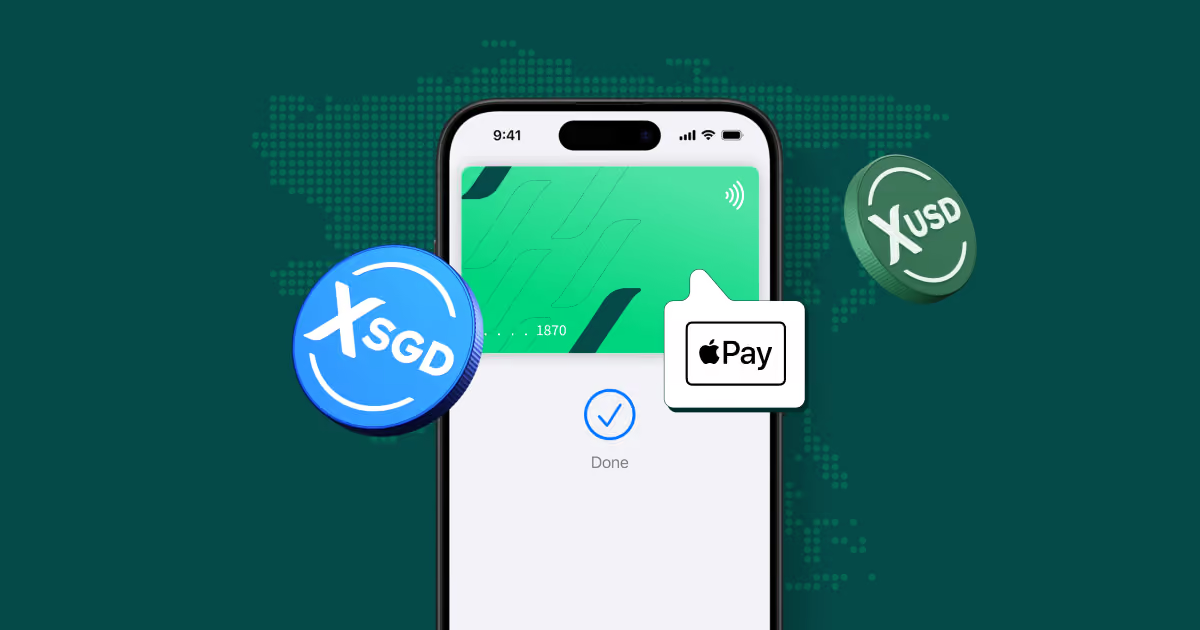
- The Tap: The wearable securely passes a unique digital code to the payment terminal, acting exactly like an Apple Pay or Google Pay mobile flow.
- The Match: The security system safely translates that digital code back to the user's primary account behind the scenes.
- The Approval: Issuing software routes the request through the Visa network to instantly verify funds and approve the transaction.
- The Settlement: The underlying money routing and digital treasury layers complete the transfer of value in the background.
Because the underlying payment networks treat a smart ring token exactly like a mobile wallet token, existing card programs are already structurally ready to support these new form factors without changing their core setup.
Why Are Wearables the Next Step for Payment Programs?
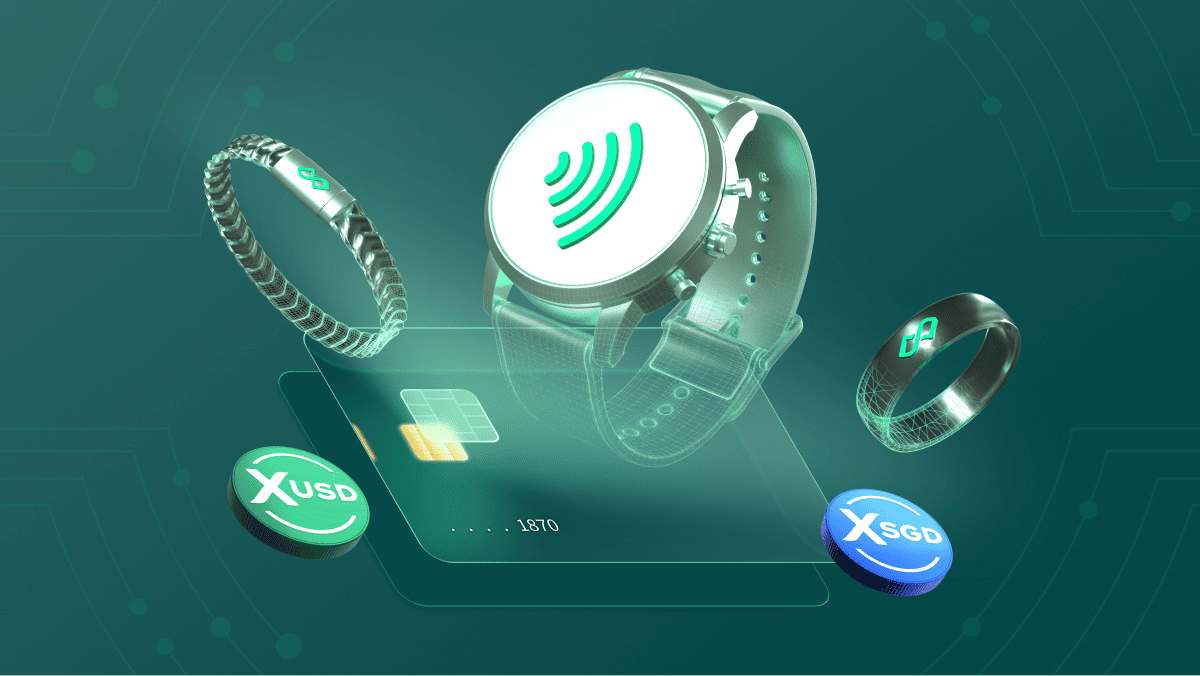
Wearables represent the next logical step for payment programs because they serve as frictionless containers for existing tokenised card credentials. Instead of requiring a user to pull out a phone or card, look at a screen, and authorise, wearables embed the token directly into passive form factors like rings, bracelets, or key fobs. By utilising StraitsX-enabled cards, platforms like Tappy Tech and Tapeeze seamlessly extend tap-to-pay functionality to everyday objects, focusing on user experience rather than altering the underlying financial network
This optimisation focuses on user experience rather than altering the underlying financial network. Fintech issuers adopting this approach gain distinct operational advantages:
- Screenless Operation: Zero reliance on device battery life or display screens for basic authentication.
- Continuous Access: Always-on availability reduces payment failure at the point of sale.
- Elevated Engagement: Lower physical friction leads to higher transactional touchpoints per user.
- Brand Distinction: Unique physical hardware allows fintech firms to stand out in a crowded digital banking landscape.
How can Card Programs Evolve into a Wearables Ecosystem?
Card programs are evolving into comprehensive device ecosystems by shifting their focus away from specific form factors and toward unified financial identities. In this new model, a physical card is no longer the primary product. It is simply one of many available physical formats of a central tokenised account. The core product becomes the API control plane that governs these distributed access points.
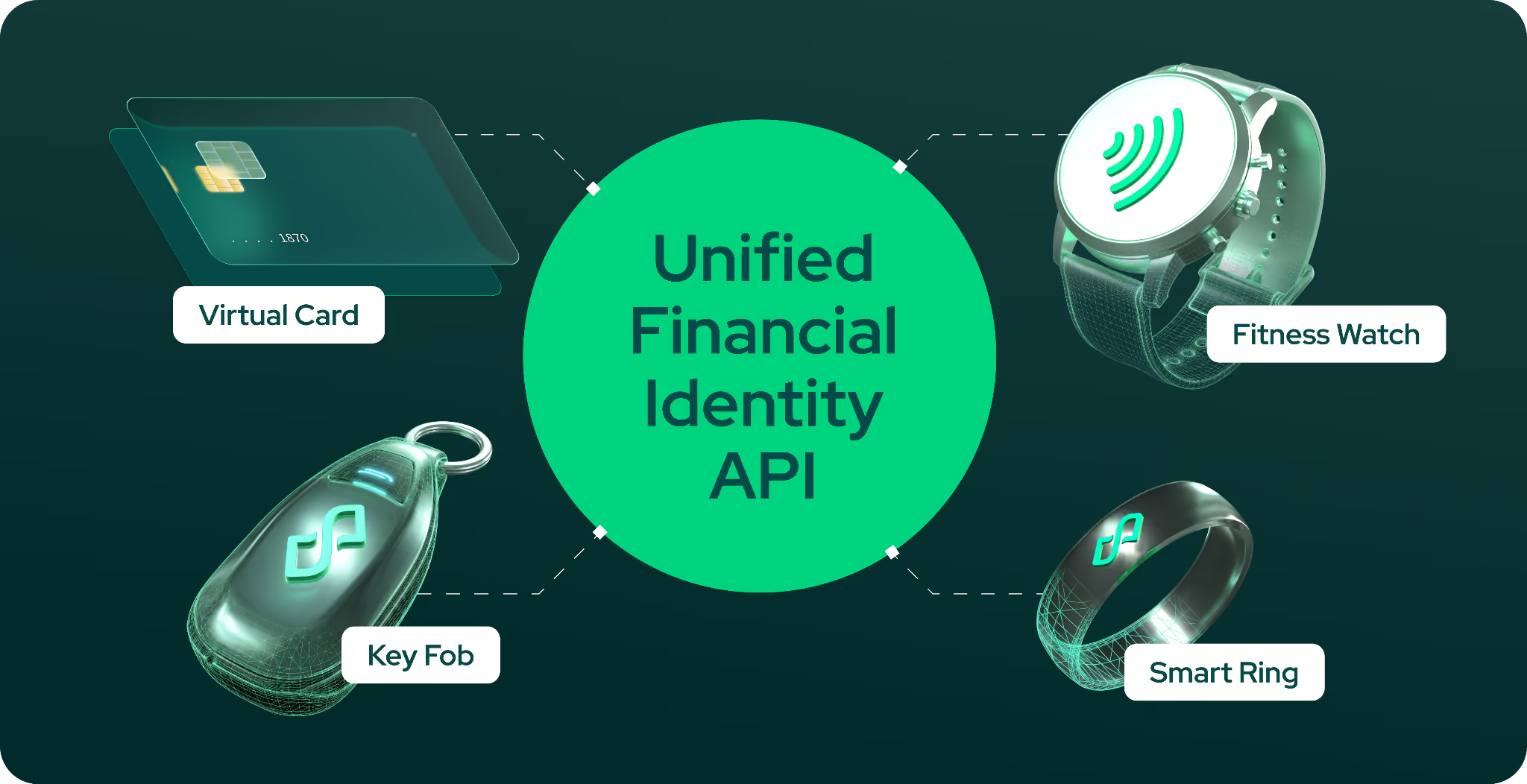
This evolution redefines standard industry terminology. Instead of setting up separate systems for physical cards and virtual wallets, companies are building single, interconnected identity networks. This ensures that whether a customer pays with a traditional card, a piece of jewellery, or a smart device, the underlying authorisation and account balance remain perfectly synchronised.
What Is the Strategic Impact of Wearables on Fintechs?
The strategic impact of wearables forces fintechs to choose between remaining simple card programs or expanding into multi-device payment platforms. Treating wearables as a minor product feature overlooks their true value. They represent a fundamental expansion of how an issuing stack distributes its services to users in the physical world.
For consumer-facing card programs, navigating this transition successfully depends on upgrading the underlying backend system. Implementing a programmable multi-rail transaction hub allows companies to anchor user identities to modern, high-velocity infrastructure. The future of payments belongs to card programs that move past plastic limitations, focusing instead on the invisible issuing systems that power value wherever a user decides to tap.
How Does StraitsX Power the Next Generation of Tokenised Wearables?
Building a wearable payment program requires a highly integrated architecture that balances device tokenisation with immediate treasury settlement. StraitsX provides the end-to-end, API-driven infrastructure necessary to manage these demands. As the native issuer of XSGD and XUSD, StraitsX offers a vertically integrated stack that optimises settlement and eliminates third-party counterparty risks.
Our infrastructure has already supported an 83-fold increase in cards issued for partners, powering major platforms like RedotPay, which processed millions in daily cross-border transaction volume. When expanding into wearables, our platform delivers distinct operational advantages:
- Full BIN Sponsorship: Access the Visa network with additional payment network integrations rolling out soon. This will allow issuers to link secure tokens to physical wearables like rings or watch straps without independent bank partnerships.
- Native Stablecoin Settlement: Drive high-frequency transactions via direct settlement in XSGD or XUSD, optimising treasury management with zero handling fees for our native assets.
- Efficient Market Entry: Launch branded, device-linked payment initiatives across APAC in as little as 12–14 weeks.
- Wallet Ready Cards: We support end-to-end card tokenisation across major mobile and wearable wallets, like Apple Pay, Google Pay, and Samsung Pay.
The future of transactions relies on invisible infrastructure that makes payments completely seamless. By leveraging the StraitsX Card Issuance API, businesses can deploy regulated, stablecoin-backed rails into rings, watches, and smart devices across Asia.
To transition your platform from plastic to a multi-device ecosystem, contact the team to launch wearable-ready card programs with StraitsX.
.jpg)