%20(1).jpg)
Key Highlights
- Global card programmes can become increasingly complex when BIN sponsorship, card issuing, processing, wallet provisioning, and settlement are managed through separate providers.
- A single-integration model brings card programme capabilities into a more consistent infrastructure relationship, reducing the coordination required between multiple vendors.
- For multi-market expansion, the benefit is not identical programmes everywhere, but the ability to build on the same core infrastructure across supported markets.
- Stablecoin-native settlement can further reduce infrastructure dependencies for crypto-linked and stablecoin-funded card programmes.
Expanding a card programme across markets can introduce complexity across BIN sponsorship, card issuing, processing, wallet provisioning and settlement. When these capabilities sit across separate providers, every new market or capability can introduce additional integrations, commercial relationships and operational dependencies.
For platforms expanding across markets, this can mean adding new integrations, contracts, compliance workflows, and support relationships each time a new jurisdiction is added. A single-integration card issuing model reduces this complexity by bringing core issuing functions under one infrastructure relationship.
For businesses building a long-term, multi-market card programme, the benefit extends beyond bringing issuing and processing together. A more integrated stack can also reduce the number of providers and systems that need to be managed as the programme expands.
What Should "Single Integration" Actually Include?
Not every issuer that offers a single integration covers the same scope. Platform operators evaluating this model should confirm what is actually included under one technical and operational relationship.
- Card issuing and processing. Are these handled by the same infrastructure stack, or does issuing depend on a separate partner?
- BIN sponsorship or scheme membership. Is scheme access part of the same infrastructure relationship, or does it require a separate arrangement?
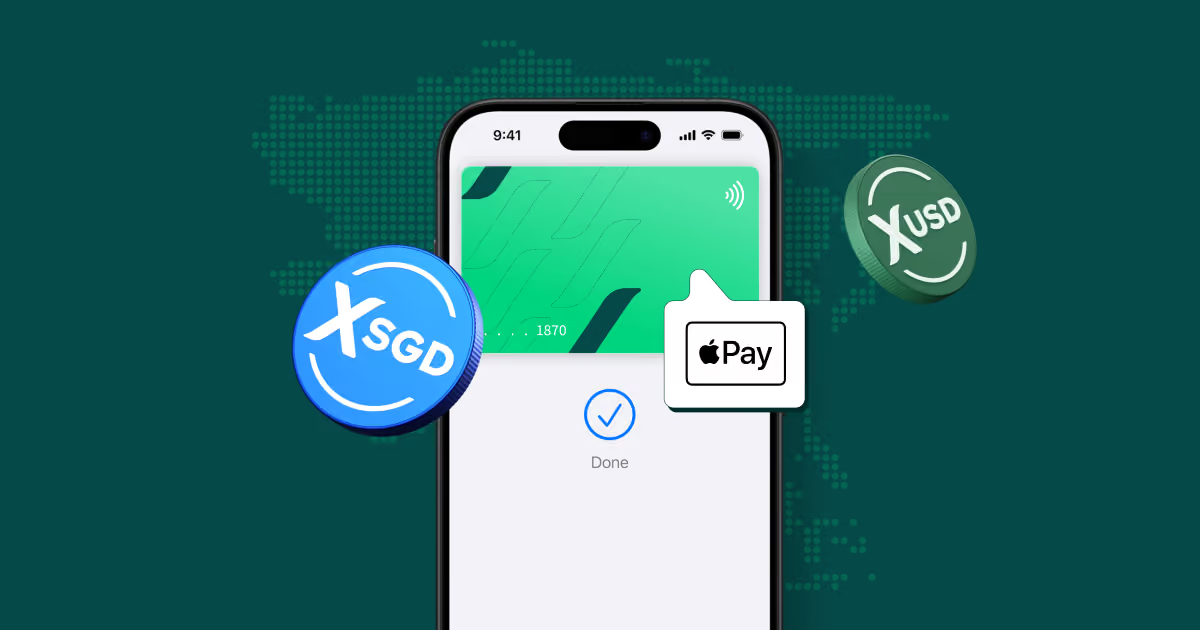
- Wallet provisioning. Are Apple Pay, Google Pay and Samsung Pay provisioning capabilities supported as part of the issuing infrastructure?
- Settlement. Is settlement integrated with the card issuing stack, or does it require a separate treasury or banking integration?
A single integration does not necessarily mean that one provider performs every function internally. An issuer may offer one API while still relying on several providers behind it. For platform operators, the more important question is which parts of the programme are actually managed within the same infrastructure stack and which still depend on external partners.
What Does a Multi-Vendor Card Stack Actually Cost a Platform Operator?
The direct costs of a multi-vendor stack are usually visible: separate commercial contracts, separate integration work, separate support relationships. Less visible costs show up later. A change to transaction authorisation logic, for example, may require coordinating across the issuer, processor and programme infrastructure. A wallet provisioning issue may involve dependencies across issuing, tokenisation and wallet certification. When an issue spans more than one provider, identifying ownership and coordinating resolution can add operational overhead.
This coordination overhead can increase as a platform expands into new markets. New markets may require different BIN arrangements, settlement flows, compliance processes, or infrastructure depending on regional coverage.
For a platform expanding internationally, coverage is therefore only part of the equation. The other consideration is whether entering a new market means rebuilding parts of the issuing stack with new providers.
Why Consider a Single-Integration Issuing Model?
For businesses operating card programmes across multiple markets, a single-integration model can reduce the number of technical and operational relationships that need to be managed. Bringing BIN sponsorship, issuing, processing, wallet provisioning and settlement closer together can also make it easier to add capabilities without coordinating multiple providers.
There is still a trade-off. Consolidating infrastructure increases reliance on the capabilities, coverage and operational reliability of the chosen provider. Platform operators should therefore evaluate both the breadth of the infrastructure and its ability to support the programme as it grows
For businesses expanding globally, an issuer’s current market coverage matters, but so does the infrastructure required to enter additional markets. If every expansion requires a new processor, sponsor or integration, the operating model becomes harder to manage over time.
What Changes When a Card Programme Expands Across Markets?
With a single integration, a platform can use the same core issuing stack as it enters supported markets, rather than starting another infrastructure integration for each one.
That does not mean card programmes work identically in every jurisdiction. Regulatory requirements, card network rules, programme structures, and available products still vary by market.
What remains consistent is the underlying infrastructure relationship. Depending on the programme and market, this can cover Visa BIN sponsorship, API-based virtual and physical card issuance, issuer processing, transaction controls, settlement, and digital wallet provisioning.
For businesses looking to support card programmes across multiple markets, the key question is therefore not simply where an issuer operates today. It is whether the underlying infrastructure can support expansion without requiring the card stack to be rebuilt each time.
The same applies to digital asset platforms supporting stablecoin-funded or crypto-linked card use cases. If stablecoin settlement sits outside the card stack, international expansion may introduce another provider and reconciliation layer. Bringing issuing, processing, and settlement closer together reduces the number of systems the platform needs to coordinate.
Global card issuing should therefore not be read as one programme operating unchanged everywhere. It is an infrastructure model that enables a business to expand into supported markets while maintaining a consistent core issuing stack.
How Does StraitsX Support Multi-Market Card Programmes?
StraitsX brings the core components of a card programme together in one infrastructure stack, covering card issuing, issuer processing, Visa BIN sponsorship, supported digital wallet provisioning, and stablecoin settlement. This gives platforms a more direct way to manage their card programmes without coordinating multiple providers across the transaction lifecycle.
For businesses expanding across markets, the same infrastructure can support the programme as its requirements grow. Rather than treating each new market or capability as a separate integration project, platforms can build on an existing issuing setup while accounting for the regulatory, compliance and programme requirements of each supported market.
The StraitsX stack supports:
- API-based virtual and physical card issuance
- Visa BIN sponsorship and integrated issuer processing
- Apple Pay, Google Pay, and Samsung Pay provisioning for eligible programmes
- Tokenised payment experiences across supported mobile and wearable form factors
- Stablecoin settlement using XSGD and XUSD.
- Multi-market card programme infrastructure
StraitsX is licensed and regulated by the Monetary Authority of Singapore (MAS) as a Major Payment Institution (MPI) for specified payment services. This provides a regulated foundation for its broader payments infrastructure, while its Visa BIN sponsorship, card issuing and processing capabilities, and stablecoin-native settlement infrastructure enable digital asset platforms, fintechs, wallets, and payment companies to integrate card programmes with their existing payment and treasury flows.
What If You Already Have a Card Programme?
A single-integration model can also be relevant for businesses that already operate a card programme across multiple providers.
Limitations around market coverage, wallet support, settlement, processing or operational reliability can become more pronounced as a programme scales. Moving to a more integrated infrastructure stack can address these constraints while reducing the number of infrastructure relationships the platform has to manage.
Migration requirements vary by programme and can involve BIN arrangements, processing, cardholder data, wallet tokenisation, settlement flows, compliance workflows and programme continuity planning.
Platform operators evaluating how many providers currently sit behind their card programme, and what that coordination is actually costing, can speak with the StraitsX team about what consolidating onto a more integrated infrastructure stack would involve.
Learn more about StraitsX card issuing infrastructure.
Frequently Asked Questions
What is global card issuing infrastructure?
Global card issuing infrastructure enables businesses to operate card programmes across multiple markets through capabilities such as BIN sponsorship, issuing, processing, settlement and digital wallet provisioning.
What should a single-integration card issuing platform include?
It should bring core capabilities such as BIN sponsorship, card issuing, processing, wallet provisioning and settlement into one integrated infrastructure relationship.
Can one card issuing provider support a programme across multiple markets?
Yes. Businesses can use the same core issuing infrastructure across supported markets, while programme structures and requirements may vary by jurisdiction.
Can global card programmes support Apple Pay, Google Pay, and Samsung Pay?
Yes, where the programme and market are eligible. StraitsX supports Apple Pay, Google Pay, and Samsung Pay provisioning for eligible card programmes.
How does stablecoin settlement fit into a card programme?
Stablecoins can support the underlying funding or settlement flow while card payments continue over established card networks. StraitsX combines stablecoin settlement with card issuing and processing infrastructure.
Can an existing card programme migrate to StraitsX?
Yes, depending on the programme, market, and requirements. StraitsX can support migration across areas such as BIN arrangements, processing, wallet tokenisation and settlement.
.jpg)